Total Pageviews

Monday, October 24, 2011

Internet Availability > Movie Experience

When's the last time you went to a movie? I didn't ask when's the last time you saw a movie, I asked when was the last time you actually drove your car and went to see a movie? Those are two very different things, huh? There is a seriously big difference between merely watching a movie and actually investing the time and money to go see a movie in the theater. Today I'm going to take a look at the "movie experience" versus DVD or internet streaming. I'm going to tell you some advantages and disadvantages of both, my preference, and how these preferences connect with the film industry as a whole. Lights! Camera! Action!

Just a few years ago, viewing movies on the internet was almost unheard of. If you wanted to see a movie, you went to the theater and you saw it! At the very least, you waited until it came to the dollar theater so that you could save a few bucks (that's how my mama always did it!). Either way, the only way it was possible for you to see this movie before it came out on DVD was to drive to your local theater and see it. Things today are a different story. With 3G and wi-fi almost everywhere, we are able to download and stream movies instantly without ever leaving our couch.


In the video above, Andrew Karpen and several others discuss what they feel is the future of the film industry: free content. In today's world of high speed internet and a more ADD than every consumer, having a movie at your fingertips is exactly what the market demands. Consumers today do not have the time or focus to pour into a "movie experience" like they used to. Going to the movies can often become more of a burden than a blessing because of the time restraints and financial restraints it places upon the consumer. $10.50 for a two-hour movie? I'm sorry, but that's just not worth it.
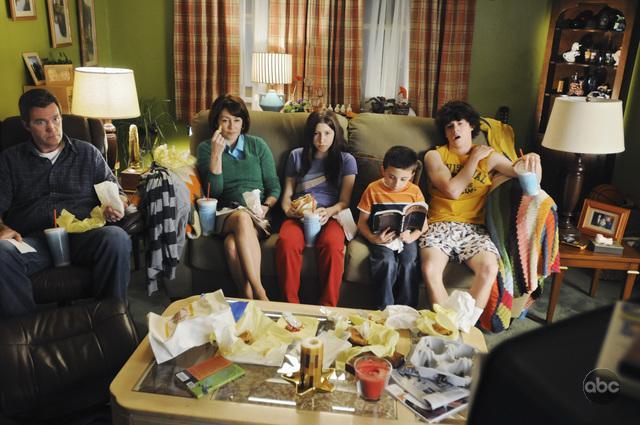
On the other side of things, we have DVD's and internet streaming. DVD's are about twice as much as one ticket to a movie, but they last you for as long as you have a DVD player (I bet you won't have one in 10 years. Just wait. You'll see). The major advantage I see to a DVD is the communal feel of gathering around and watching a movie. At my house, we have "family movie night" every Friday, where we rent a movie and watch it together. With our busy schedules, Friday night is often the only night we actually get to spend in each other's company and it's nice to be able to simply enjoy a movie together.

However, my favorite way to watch a movie is internet streaming. Here are a few reasons why:
1. It's free. 100% free. No money leaving my pocket. For a broke college student, that's very important!
2. It's convenient. I don't have to dress up and get ready to watch a movie in my own living room. Sweatpants and a T-shirt are just fine in the comfort of the apartment.
3. Selection. I remember several times in my childhood when I would go to Blockbuster with my dad and we would spend half an hour just looking for a movie! Oftentimes, we wouldn't be able to find the movie we had come for and we had to settle for something else. What a disappointment. Online, you can find literally almost every movie that was ever filmed through a simple search engine.

Internet availability is shaping the way we look at the film industry. Why pay $10 to see a movie when you can download it for free in minutes? Movies are on the path of the music industry: free downloads. Now don't get me wrong, I love a good movie, but the convenience and affordability of internet downloads far outweigh the "movie experience" that you get by going to a theater. And by the way, the last movie I saw in theater was "Unknown".... In March.

Tuesday, October 18, 2011

Music's Demise

When you hear the word "music," what do you think of? Perhaps you think of freedom, expression, liberation, passion, and heart. Or maybe you think of fame and fortune. Whatever your definition of music is, one thing is for certain: the music industry has vastly changed over the decades. What used to be considered music does not fit the model for today's pop-star, and today's pop-star would've never made just thirty years prior. So what happened? What is responsible for music's demise?

First, let's take a look at musical styles over the past several decades. In the early 1900's, blues and R&B was the primary style of music. According to Media & Culture: An Introduction to Mass Communication, Blues and R&B is the foundation for rock & roll. This brings us to our next major genre: rock & roll.  Rock & roll brought a whole new ball game to the music industry as it shook what people believed about popular music. Next we have the incoming of British rock & roll. "All we need is love" is an overly used line by none other than The Beatles. In addition to The Beatles, The Rolling Stones stunned American airwaves with their cutting-edge music that appealed to a variety of listeners. During the period of rock & roll, listeners experienced folk music such as Bob Dylan, and psychedelic music such as The Doors. In the 1960's and 1970's, punk and alternative made its way onto the scene. The Talking Heads, The Ramones, and The Sex Pistols lit up the music stage, just to name a few. As music shifted, so did the culture. One could not move without the other; they were (and are) intertwined.

We now live in the days of hip-hop. If it's got a good beat, it's going to be successful. The content of the songs is truly unimportant, as long as it's a good "jam." It's gotta have some strong bass to get your car shaking, and a beat that you can bob your head to. The rest is completely inconsequential. Your main goal as an artist these days is to have mass appeal. Your feelings, your thoughts, and your music don't matter; the money is what matters. For example, the number one single on iTunes right now is "Mistletoe" by Justin Bieber. So how did this young man make it to stardom? YouTube. That's right, this wildly popular teen sensation got his record deal simply by posting videos of himself singing on YouTube. In today's internet era, it's that simple: get recognized and get signed. All you have to do is build a fan base and you'll get noticed. After all, it's the fans that bring in the money that everyone's so desperately chasing after.

So when did this corruption begin? When did getting discovered become about popular demand rather than talent? When did image matter more than substance, quantity over quality, and money over morals? It all started with the age of the image, which is directly linked to the birth of Music Television (MTV). Before MTV, music was purely auditory. What you heard is what was important, and what you saw you only saw if you went to a show. With the birth of MTV, artists and music became extremely visual. As one of the interviewees on Before The Music Dies said, "Superficiality is in and talent is out."


In today's world, our artists are glamorous, sexy, sleek, and sophisticated. They're always put together, they're always beautiful, and they're (almost) always fake. One of the most popular pop-star of the past couple of years is Kesha Rose Sebert, better known as Ke$ha. Over the past couple of years, she has graced the iTunes charts with hit after hit, from "Tik Tok," (a song that describes a precarious night of drinking and partying- which of course can only commence when she has arrived) to "We R Who We R." The intelligence in her songs is striking, is it not? The first line of her #1 single, "Tik Tok," says, "Woke up in the morning feeling like P. Diddy." Compare this to a line from The Beatles song Across The Universe: "Pools of sorrow, waves of joy are drifting through my open mind." What a difference.

Today, music lacks the feeling and passion that it used to contain. Through television and the internet, our society has killed music as a form of expression and twisted it into a money-thirsty industry. According to Before The Music Dies, "Longevity is determined by how much money you make." Because the industry has become so financially focused, talent often slips through the cracks. Music today is based on popular appeal and generated revenue- nothing more, nothing less.


Oh, and check out these two videos; you'll notice some striking similarities!


Tuesday, October 4, 2011

Censorship: How Far Is Too Far?


In the publishing industry, there is a serious issue of censorship: just what is acceptable, and where should the line be drawn? The First Amendment clearly prohibits the government from making any law that restricts free speech. As Americans, we are entitled to our right to speak, our right to our own opinions, and our right to express these opinions however we feel fit. Censorship is in direct violation to The First Amendment, and yet it is something that takes place every day. So what do we do? How do we stand up? And better yet, what is book banning, really?

When I was in high school, I was required to read The Great Gatsby as part of my British Literature class. Unbeknownst to me, The Great Gatsby has been banned in some states (Campbell, 308)! So why ban a classic book like The Great Gatsby? Book banning usually results from the offending of another party due to your opinion or presentation of a particular topic in the literature. If I don't like what you have to say, so I'm going to try and ban your book. Unfortunately, everyone has their own opinion, and it is extremely difficult (I would say impossible) to try and please everyone. Somewhere along the way, it is very possible that you are going to offend someone; that is just a part of life.

So what's the big deal? You may think censorship only applies to some crazy mom in Utah who doesn't want her child to read the Harry Potter series because it "clearly alludes to witchcraft and the occult," but censorship stretches much further than just your average stay-at-home mom. I hate to be the one to have to tell you, but that is not true; not even in the least. In 1624, Martin Luther's Germanic translation of the Bible was burned by order of the pope. How many of you were taken aback by that? The Bible. Surely there is nothing offensive in the Bible, right? What could possibly be worth censoring from the Holy Scripture? Yet again, it didn't sit right with someone, and they just wouldn't have it.

Throughout history, there have been thousands of book bans. From 2001 to 2008, there were 3,736 challenges against American libraries. The list of the 10 most frequently challenged books of 2010 includes one of my favorite author's book Crank. This book contains a large amount of graphic, drug-related material, but what most people don't realize is that this book serves as an education for the harsh effects of drugs. This book does not focus on the joys of partying and getting high, it centers around the bad effects of drugs and it serves to educate readers on why they should not participate in such illicit behavior.

Overall, the clear issue here is freedom of speech. We are legally entitled to our own opinions and our freedom to express them however we feel is necessary. Regardless of how seemingly offensive or unnecessary material may seem, we have the right to free speech and expression. Don't be silenced.